
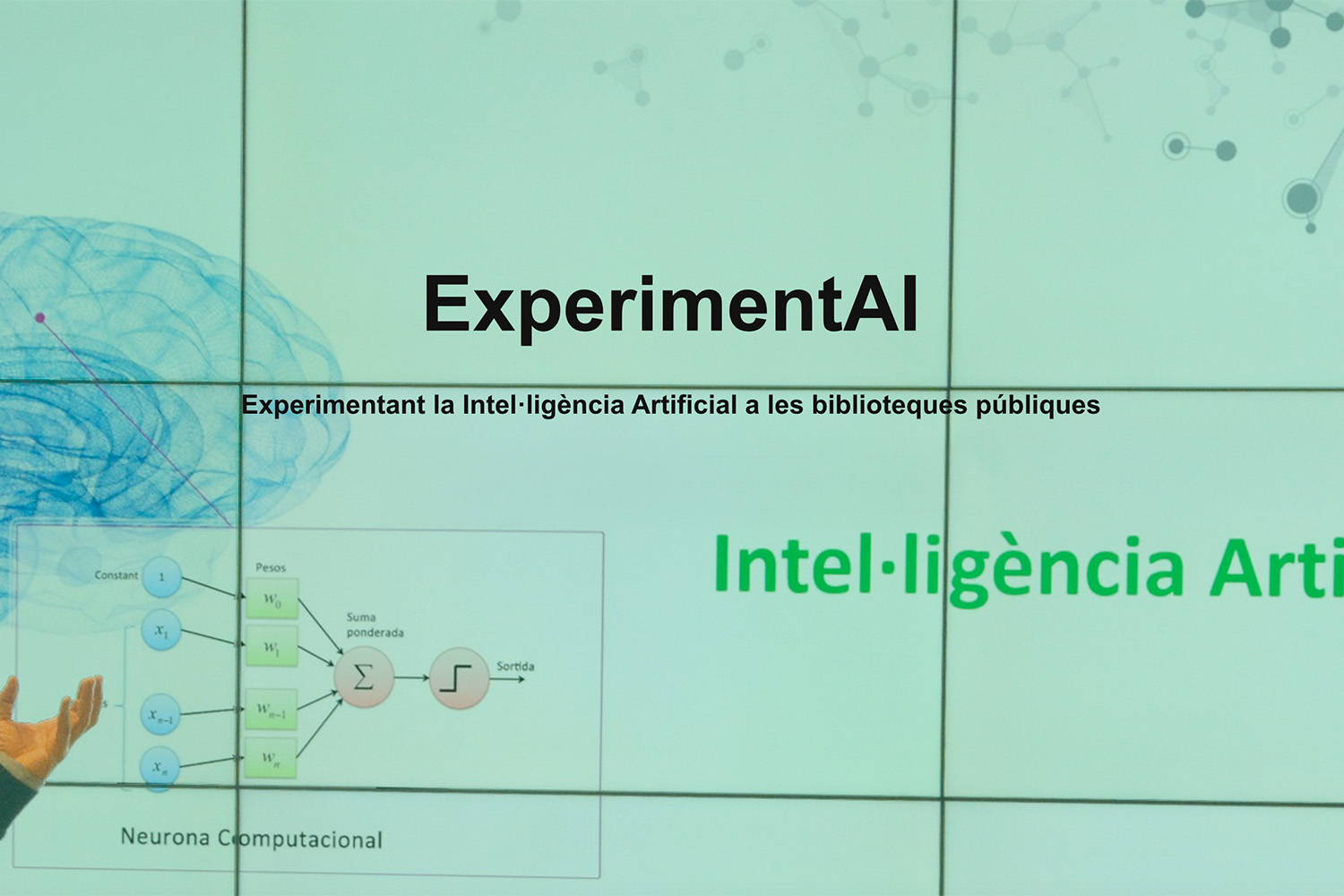
ExperimentAI is a citizen science project designed to bring artificial intelligence (AI) and computer vision closer to a general, non-specialist audience. ExperimentAI brings technology and innovation—emerging from cutting-edge research carried out at the Computer Vision Center (CVC) of the Autonomous University of Barcelona—into public libraries, powerful meeting spaces where pathways for social transformation can be explored together with citizens through the exchange of knowledge.
The different sessions are designed to be highly participatory and to foster dialogue between researchers and the public about the opportunities and limitations of the technologies presented, as well as the ethical issues surrounding them.
The 2025 edition of the ExperimentAI project, aimed at secondary school students and educational centers, is part of the European Performing Science Program (EPSP), a project funded by the European Union that involves the participation of the Épica La Fura dels Baus Foundation, the Institute of Marine Sciences (ICM-CSIC), the Open University of Catalonia (UOC), and the Computer Vision Center (CVC).
The objective of the project is to reduce the gap between science and society by promoting meaningful, two-way interaction. EPSP includes a wide range of activities that, across different languages and disciplines, engage both civil society and the research community as active protagonists. Within this framework, the Next Generation Performing Scientists (NGPS) program brings together initiatives specifically aimed at young people, students, and schools. One of these initiatives is ExperimentAI, which offers an innovative and participatory way of approaching science. Through debate, creativity, and a multidisciplinary approach, the program invites students to explore the potential of scientific research as a future career option.
Session 1: Art in the Age of Artificial Intelligence
The activity involved the participation of 4th-year secondary education students (ESO) from the technology and visual arts electives, two complementary perspectives that made it possible to explore the intersection of technology, AI, and art through practical demonstrations and spaces for discussion.
The session was led by Dr. Fernando Vilariño, Associate Director of the CVC and Scientific Director of the UAB–Cruïlla Chair in AI Applied to Music and the Arts, who provided a clear and dynamic explanation of how several key technologies related to artificial intelligence work.
Students were introduced to concepts such as computer vision, neural networks, generative models, generative art, facial recognition, facial expression detection, and the use of prompts to interact with AI systems. Through practical examples, they discovered how these technologies are applied in fields such as healthcare, mobility, and industry, and how they are part of our everyday lives.
One of the highlights of the session was the interactive workshop, where students were able to experiment firsthand with different demos developed by the CVC. These activities made it possible to understand how algorithms are trained, how machines “see” the world, and what their capabilities and limitations are.
The session concluded with an open debate on AI, during which students shared their opinions and raised questions about the social and ethical impacts of these technologies, showing great interest and a strong critical spirit.
Session 2: Comics & AI
Artificial intelligence can be applied in a wide range of fields, from healthcare and industry to creative sectors such as art, design, and digital illustration. With the aim of bringing these technologies closer to young audiences, on October 29 a team from the Computer Vision Center (CVC) visited the Abella i Serra School of Art in L’Hospitalet de Llobregat to deliver the session “AI & Comics”, an activity included in the ExperimentAI program and led by Laura Martín Montañez, Specialist in Science Communication and the Social Impact of AI.
On this occasion, the activity was aimed at students of the Higher Vocational Training Program in Graphics and Audiovisual Media. The session began with a presentation by Laura Martín Montañez, who introduced the basic concepts of computer vision. She explained how this branch of AI is present in many everyday situations, often imperceptibly, yet essential to the functioning of numerous digital tools and services.
Next, Ayan Banerjee presented a practical demonstration developed by the CVC. Through this tool, students were able to see how, starting from a personal photograph and by selecting a narrative and a graphic style, it is possible to generate an AI-created comic. This activity provided a clear and visual understanding of the potential of AI in creative processes.
The demonstration was followed by an enriching debate between the speakers and the students, focused on the relationship between art and technology. Questions were raised about the authorship of works generated with AI, the possible evolution of artistic professions, and the ethical challenges associated with the use of these tools in visual creation. The exchange of perspectives helped open up new reflections on how these technologies may transform the future of the creative sector.
To conclude the session, participants had the opportunity to evaluate the presented technology and analyze its potential risks, following the criteria established by the European Commission for the responsible use of AI. This exercise made it possible to better understand how these technologies are regulated and which factors must be considered to ensure their safe and ethical use.
Session 3: From Movement to Pixel
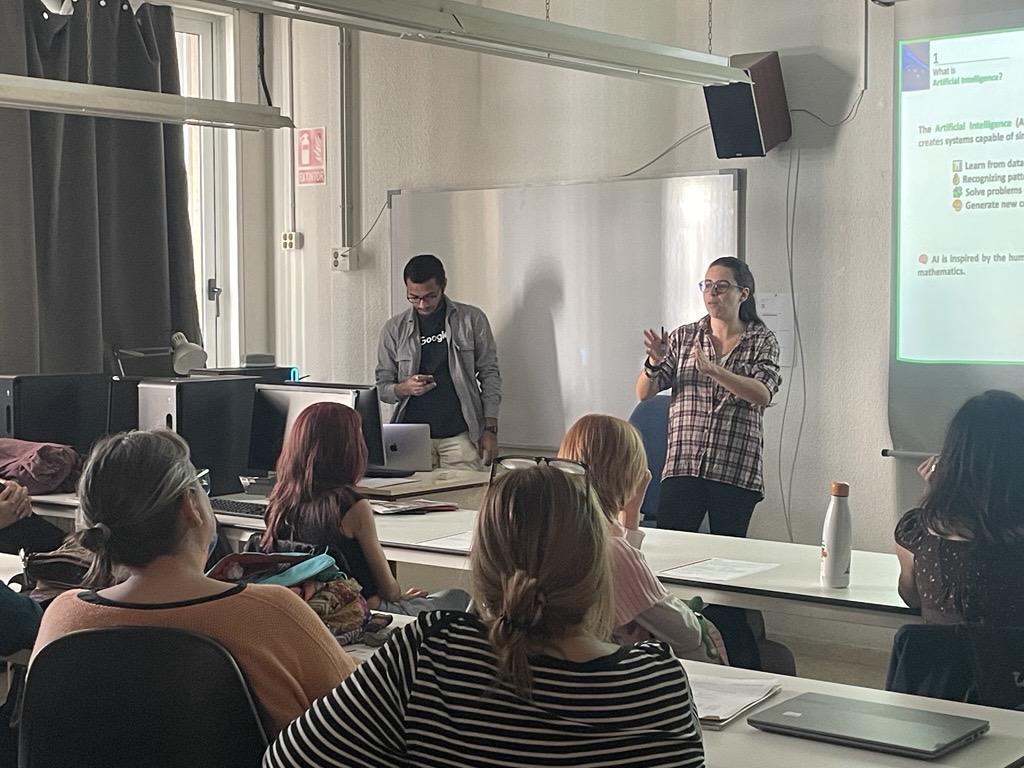
What is latent space? If we use the body in the creative process, can we gain more control over the work we generate with artificial intelligence? Is AI creative? Can it replace humans?
These were some of the questions that guided the practical session “From Movement to Pixel”, carried out by the Computer Vision Center (CVC) on November 4, 2025, at the Serra i Abella School of Art and Design in L’Hospitalet de Llobregat, as part of the ExperimentAI program, which this year celebrates its third edition with activities in various educational centers across Catalonia.
On this occasion, the activity involved students from the Intermediate Vocational Training Program in Interactive Graphics (CFGM) and the Higher Vocational Training Program in Animation (CFGS), who explored the intersection of movement, art, and AI. The session was led by David Serrano Lozano (predoctoral researcher), Héctor Laria Mantecón (postdoctoral researcher), and Laura Martín Montañez (Social Impact of AI), who introduced concepts such as computer vision, neural networks, generative models, and generative art.
Through practical demonstrations, students discovered how machines “see” the world, how images can be generated from body movements, and how 3D virtual scenes are created using technologies such as VGGT. Key issues related to bias, privacy, authorship, and ethics in the use of AI were also addressed, opening an enriching debate on the role of these technologies in present and future society.
One of the highlights was the interactive workshop, where students experimented with creative interfaces that connect the human body with neural networks, putting into practice the idea that movement can be an artistic tool in digital environments.
The session concluded with an open debate and, subsequently, a risk analysis activity based on the regulatory framework of the European Commission. Students classified different AI applications according to their level of risk—unacceptable, high, limited, or minimal—reflecting on which uses should be prohibited and which might be acceptable under certain conditions. This dynamic helped them understand how European regulation seeks to ensure safety, transparency, and fundamental rights in the development and use of AI.
Sessió 4: Patrimoni i IA
On November 11, 2025, the Computer Vision Center (CVC) carried out the fourth session of the ExperimentAI program at the Serra i Abella School of Art and Higher Design in L’Hospitalet de Llobregat.
The visit to EA Serra i Abella was the fourth in a series of sessions that the CVC has conducted throughout the year at various educational centers across Catalonia, with the aim of fostering interest in science and technology, promoting critical thinking, and opening spaces for dialogue on the role of artificial intelligence in present and future society.
The session was led by Adrià Molina Rodriguez, a PhD student at the CVC and a member of the Document Reading research group. His research focuses on information extraction from historical documents, particularly historical photography. The activity involved students from the Higher Vocational Training Program in Photography, giving rise to a discussion-based session.
Students were introduced to concepts such as computer vision and neural networks. Through examples, they discovered applications of artificial intelligence in the field of historical heritage and how AI can be used to date photographs.
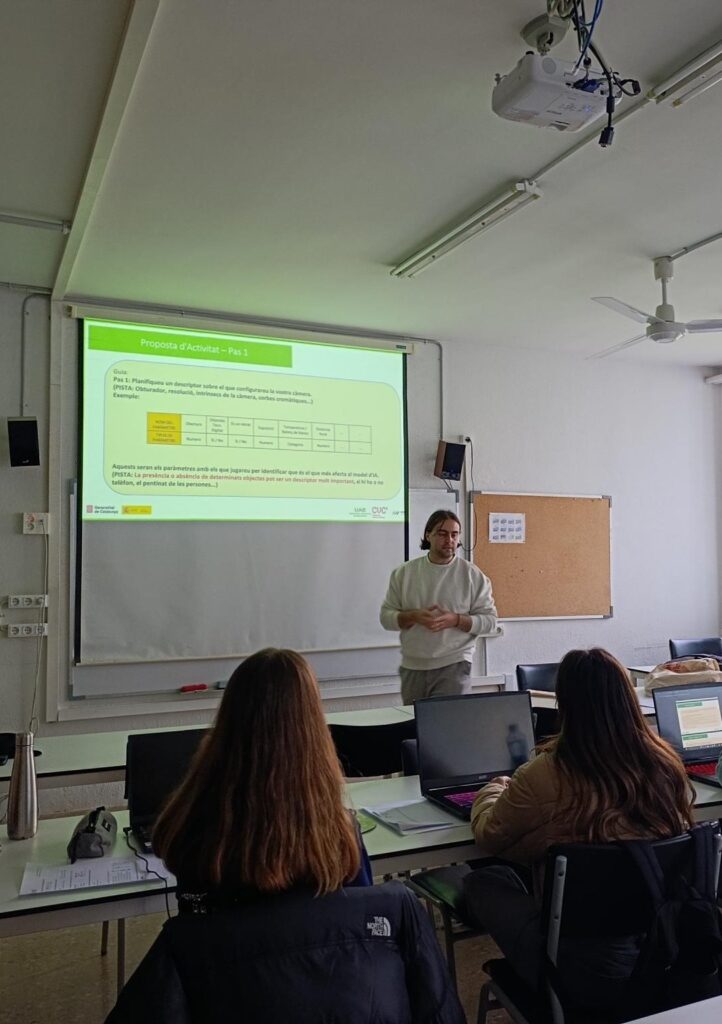
The day concluded with a hands-on activity in which students acted as auditors of an AI system that estimates the year a photograph was taken. First, they defined which parameters (shutter speed, color, etc.) could influence the prediction. Then, they conducted tests by varying only one factor at a time to observe how the estimated date changed.
Next, they took new photographs, attempting to have the AI classify them as if they belonged to specific years, examining which elements make an image appear older or more modern. Finally, they prepared a mini audit describing the most and least influential factors and the potential biases detected.
Throughout the session, students shared their opinions and raised questions about the social and ethical impacts of these technologies.
Session 5: ExperimentAI & BadamonIA
Artificial intelligence continues to explore new frontiers in education and creativity. On November 13, a team from the Computer Vision Center (CVC) visited Institut Badalonès to carry out a new session of the ExperimentAI program, led by Laura Martín Montañez, Specialist in Science Communication and the Social Impact of AI. This time, the session focused on the BADAMON.IA project.
BADAMON.IA is an artistic and educational experiment that combines creativity, learning, and technology. Its goal is to stimulate young people’s imagination while encouraging reflection on how AI tools can offer both advantages and risks. The initiative was made possible through the collaboration of three organizations: the CVC, responsible for training and applying the AI technology; the Épica La Fura dels Baus Foundation, in charge of the creative process and the exhibition; and Col·legi Badalonès, with students as the main protagonists of the creative process.
During the session, students were able to experiment with two practical demonstrations presented by Edgar Gracia. The first was similar to those in previous sessions: starting from a photograph and selecting a style and a narrative, participants could generate an AI-created comic. The second demonstration, however, added a new level of interactivity: the system detected the person’s facial expression and automatically generated an image linked to that expression, allowing students to explore the relationship between emotions and visual creation.
A large part of the session was dedicated to explaining the BADAMON.IA experiment. Students had created their own versions of the Dimoni of the Badalona Festes de Maig, taking into account Sustainable Development Goals 13 (Climate Action) and 14 (Life Below Water). Based on 485 original drawings, the technical teams from the Épica Foundation and the CVC trained an AI model (Stable Diffusion) to generate more than 1,000 new images inspired by the students’ creativity. Subsequently, the students themselves voted to select the three winning dimonis:
- “Bighead Emerging from Trash”
- “The Ring with Fish”
- “Dimonia, Where Are You Taking the World?”
In addition, students had the opportunity to reflect on how artificial intelligence can transform the world, discussing both the advantages and the potential risks of these technologies in different areas of society.